United Airlines Flight UA770 Emergency Diversion: Full Timeline, Cause, and Passenger Impact
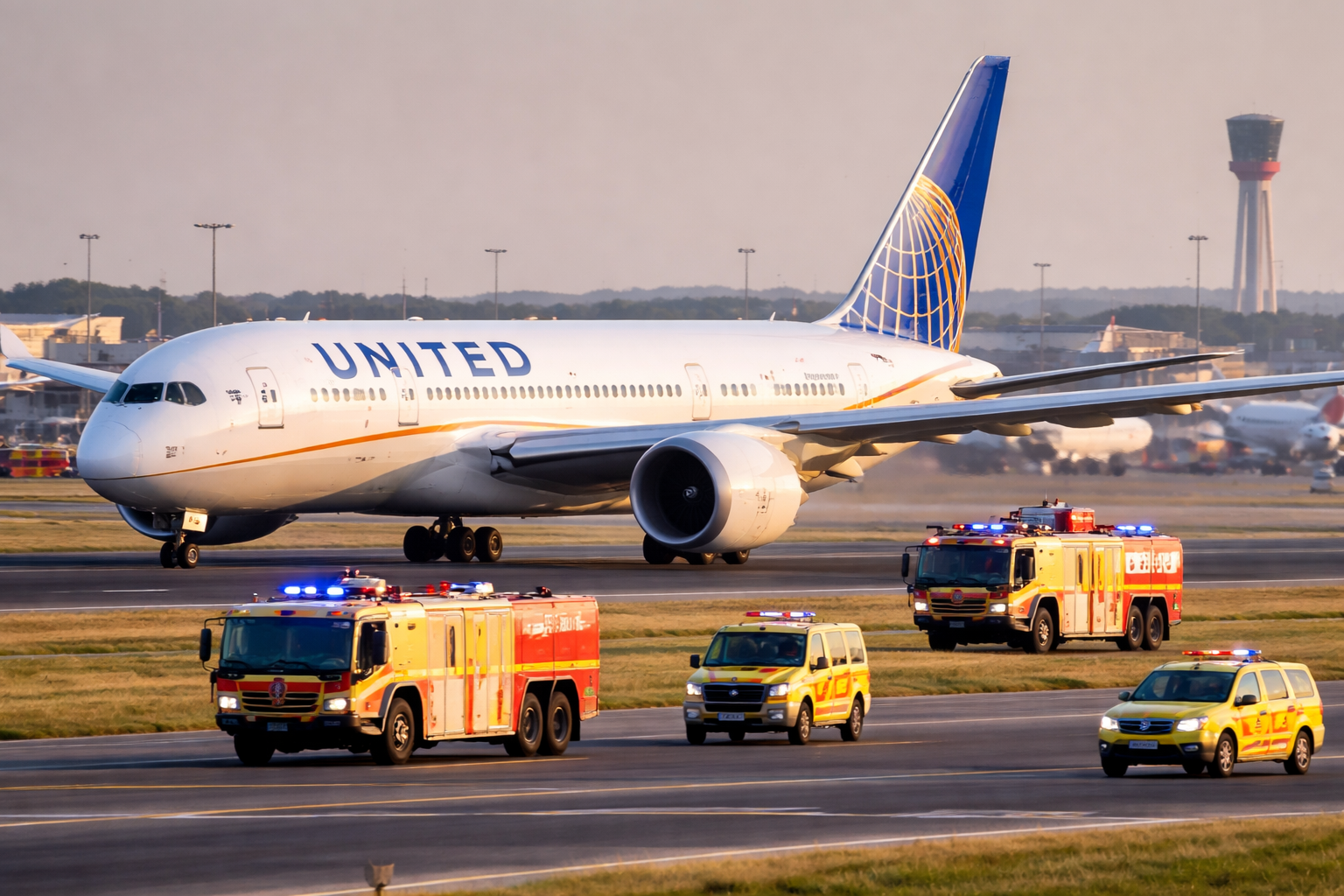
The phrase united airlines flight ua770 emergency diversion has drawn sustained attention because it combines two elements that naturally concern travelers: a specific long-haul flight and the declaration of an in-flight emergency. When people encounter this search term, they are usually seeking clarity rather than drama. They want to know what actually happened, why a diversion would be ordered on a transatlantic flight, and what such an event says about airline safety in real-world operations. Understanding this incident requires separating confirmed operational realities from speculation and explaining how modern aviation systems respond when something abnormal occurs.
Understanding the Context of United Airlines Flight UA770
United Airlines Flight UA770 was scheduled as a transatlantic service from Barcelona to Chicago, a route that typically crosses large stretches of ocean and requires careful operational planning long before departure. Long-haul flights like this are dispatched with multiple alternates in mind, along with fuel reserves and contingency plans that account for weather, traffic, and potential technical issues. When a flight of this nature becomes associated with an emergency diversion, it does not automatically indicate imminent danger. Instead, it reflects a structured decision by the flight crew to prioritize safety by landing earlier than planned.
The discussion around united airlines flight ua770 emergency diversion centers on the decision to divert to London Heathrow rather than continue to the United States. Heathrow is not simply a convenient stop; it is one of the most capable airports in the world for handling large aircraft under abnormal conditions. Its runways, emergency services, maintenance support, and passenger handling capacity make it a logical choice when a widebody aircraft requires immediate attention.
What an Emergency Diversion Really Means
In commercial aviation, an emergency diversion is a procedural outcome, not a judgment of failure. Crews are trained to divert whenever the safety margin narrows beyond what is considered acceptable for continued flight. This can happen for a variety of reasons, ranging from mechanical indications to medical emergencies. The word “emergency” often triggers anxiety among passengers and observers, but within aviation it is a formal classification that ensures priority handling by air traffic control and immediate access to ground resources.
In the case of united airlines flight ua770 emergency diversion, reports indicate that the crew declared an emergency and requested priority handling. This action activates standardized protocols across the aviation system. Air traffic controllers reduce radio congestion, adjust surrounding traffic, and coordinate with the diversion airport so that the aircraft can land without delay. These steps are designed to simplify the situation, not to dramatize it.
The Role of Emergency Transponder Codes
Many discussions of united airlines flight ua770 emergency diversion reference the use of the emergency transponder code commonly known as “7700.” This code is universally recognized in aviation as a general emergency signal. When set, it alerts air traffic control and nearby facilities that an aircraft requires immediate assistance or priority handling. Importantly, the code does not specify the nature of the emergency. It simply communicates urgency.
This distinction matters because public flight-tracking data can show when a transponder code changes, but it cannot explain why. Observers may infer causes such as pressurization issues or system warnings, but those inferences remain unconfirmed unless supported by official statements or credible investigative reporting. The presence of the emergency code confirms seriousness, not specifics.
Possible Triggers for the UA770 Diversion
Although the exact technical details of united airlines flight ua770 emergency diversion have not been fully detailed in widely accessible official summaries, it is useful to understand the types of issues that commonly lead to such decisions on long-haul flights. Pressurization warnings are frequently cited in discussions of transatlantic diversions because cabin pressure is critical at cruising altitudes. Even a sensor anomaly can justify a precautionary descent and diversion, particularly when the aircraft is far from its final destination.
Mechanical indications that affect redundancy can also prompt diversion. Modern aircraft are designed to tolerate certain failures, but crews evaluate whether continuing for several more hours over oceanic airspace is prudent given the circumstances. Medical emergencies represent another common cause. A passenger experiencing a life-threatening condition may require immediate access to advanced medical care, making diversion the responsible choice.
Regardless of the specific trigger, the key point in united airlines flight ua770 emergency diversion is that the crew identified a condition that warranted landing at the nearest suitable major airport rather than continuing across the Atlantic.
Why London Heathrow Was the Chosen Destination
London Heathrow’s role in united airlines flight ua770 emergency diversion is central to understanding the operational logic behind the event. Heathrow is a primary diversion hub for transatlantic traffic because it combines long runways, all-weather capabilities, and comprehensive emergency response services. For an aircraft arriving unexpectedly with a declared emergency, these factors reduce risk during landing and allow immediate support once on the ground.
Heathrow also has the infrastructure to handle the aftermath of a diversion. This includes the ability to accommodate passengers, coordinate with airline operations for rebooking or accommodations, and support maintenance inspections if the aircraft requires technical evaluation. While it may seem counterintuitive to land in one of the world’s busiest airports during an emergency, the reality is that such airports are often the safest options precisely because of their resources.
What Happens in the Cockpit During an Emergency Decision
To appreciate united airlines flight ua770 emergency diversion fully, it helps to understand how crews make diversion decisions. When an abnormal situation arises, pilots follow a structured process that emphasizes control and verification. The first priority is always flying the aircraft safely, maintaining appropriate altitude, speed, and configuration. Once the aircraft is stable, the crew consults checklists designed for the specific warning or condition encountered.
At the same time, communication with air traffic control becomes more direct. Declaring an emergency simplifies interactions, ensuring that the crew’s instructions are given priority and that surrounding traffic is managed to reduce workload. Airline operations centers may also be involved, providing additional expertise and coordinating ground arrangements. This multi-layered approach ensures that decisions are not made in isolation but are supported by a network of professionals.
The Passenger Experience During a Diversion
From inside the cabin, united airlines flight ua770 emergency diversion would have felt different from a routine flight, even if the aircraft itself remained stable. Cabin crew are trained to manage both safety and communication, securing the cabin earlier than usual and preparing passengers for an unexpected landing. Announcements may be brief and factual, reflecting the need to avoid speculation while the situation is still developing.
Passengers often notice changes in flight profile, such as an earlier descent or a different direction of travel. These cues can heighten anxiety, particularly for those unfamiliar with aviation procedures. It is important to recognize that crews balance transparency with responsibility. Providing incomplete or speculative information can cause unnecessary concern, so communications tend to focus on what passengers need to do rather than on technical detail.
After Landing: Why Delays Are Common
Once united airlines flight ua770 emergency diversion concluded with a safe landing, the situation did not instantly return to normal. Post-diversion procedures can take significant time, and this often surprises passengers. If the diversion was related to a technical issue, maintenance teams must inspect the aircraft before it can be cleared for further flight. Even if the issue proves minor, documentation and verification are required.
Crew duty limits also play a role. Long-haul crews operate under strict regulations governing maximum duty time and required rest. A diversion can push a crew beyond those limits, making a replacement crew necessary before the flight can continue. Passenger logistics, including immigration processing, accommodations, and rebooking, add further complexity. These factors explain why diversions, while safe, can be operationally disruptive.
Interpreting Public Information Responsibly
The volume of online discussion surrounding united airlines flight ua770 emergency diversion illustrates how quickly aviation events can become amplified. Flight-tracking screenshots, social media commentary, and secondary reporting often circulate within hours of an incident. While some of this information is accurate, it can also blend observation with assumption.
A responsible interpretation focuses on confirmed facts: the route, the diversion, and the safe landing. Technical explanations should be treated cautiously unless they are supported by official airline statements or credible investigative sources. Aviation operates on precise data and documented procedures, and meaningful conclusions require the same level of rigor.
What This Incident Says About Airline Safety
Viewed in context, united airlines flight ua770 emergency diversion reinforces rather than undermines confidence in commercial aviation. The diversion demonstrates that crews are empowered to make conservative decisions, that air traffic control systems respond quickly to prioritize safety, and that major airports are prepared to support unexpected arrivals. The outcome most travelers care about, a safe landing, was achieved.
Emergency diversions are not anomalies in the sense of system failure. They are built-in responses to uncertainty. Aviation safety is based on anticipating risk and reducing it early, even when that means inconvenience. In this light, the UA770 diversion represents a system functioning as designed, with multiple safeguards aligning to protect passengers and crew.
Conclusion
The enduring interest in united airlines flight ua770 emergency diversion reflects a natural desire to understand how airlines handle the unexpected. While the term “emergency” can sound alarming, the reality is more measured. A diversion is a proactive safety decision supported by training, technology, and international coordination. United Airlines Flight UA770’s diversion to London Heathrow fits squarely within this framework, illustrating how modern aviation prioritizes caution over continuation.
For passengers and observers alike, the most important lesson is that safety in aviation is not defined by the absence of diversions, but by how effectively they are executed. In the case of United Airlines Flight UA770, the emergency diversion stands as an example of disciplined decision-making and coordinated response, resulting in the outcome the industry strives for every day: everyone arriving safely, even if not exactly as planned.
Also read: Mike Wolfe Passion Project Explained: From American Pickers to Preservation




Post Comment